The First Time I Tried Hotpot (and Why It Stuck)
The First Time I Tried Hotpot
My first trip to China was in 2015. By that point I’d already met my (now) wife, but this was the first time we were in China together. I was staying somewhere around Dongzhimen in north-east Beijing, from memory. She was working during the week, so I had a lot of time on my own — which, as it turns out, is a very good way to throw yourself head-first into a completely different food culture.
I embraced it pretty quickly. Dumplings from street sellers. Baozi from small, slightly questionable-looking local cafés. The sort of places where you’re not entirely sure what you’ve ordered, but you trust the process and hope for the best. That said, I’ll be honest — the first time I stumbled across a Starbucks, it felt like a small victory. A bit of normality. A reset button. Hotpot, however, was something else entirely.
The First Hotpot
My first proper introduction happened in a huge shopping centre — the GR Shopping Mall, a couple of tube stops away. I met my wife there after work one evening, and we went into what looked like a completely unremarkable restaurant. It turned out to be an all-you-can-eat hotpot place. And I mean all you can eat.
For something like £10–£15 each, we had unlimited food and drinks — including local beer. There is absolutely nothing in the UK that comes close to that level of value.
We sat down, she spoke to the server, and they both laughed. I asked why. She told me she’d just explained that this was a foreigner’s first time trying hotpot — and that we wanted to try everything. Which, in hindsight, may have been a mistake.
Controlled Chaos
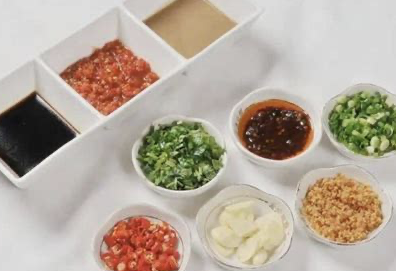
We were handed bowls and chopsticks, still wrapped in cellophane, and then I was taken over to what I can only describe as a sauce station. This wasn’t food. This was just for building your dipping sauce.
Garlic, sesame paste, coriander, spring onions, oils, sauces — things I recognised, and plenty that I didn’t. My brain was already trying to catch up. What are we actually doing here?
We grabbed a couple of beers and went back to the table. Waiting for us was a pot, split down the middle like a yin-yang symbol, filled with two different broths — one pale, one aggressively red and full of floating bits that looked vaguely threatening. I was told the red side was spicy. That turned out to be an understatement.
Everything Goes In
As the broth started to boil, the server returned with a trolley. Not a plate. A trolley. Covered in raw ingredients.
Shrimp. Lamb. Beef. Various vegetables. Noodles. Things I recognised. Things I didn’t. And yes — intestines, which I approached with the enthusiasm of someone making a poor life decision in real time. The process, as I quickly learned, is simple; You put things in the pot. You wait. You take them out. You eat them. Simple in theory. In practice, it felt like delicious chaos.
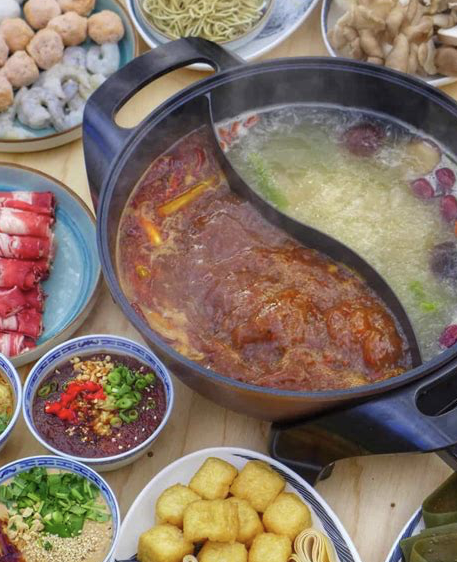
My wife started adding things to both sides of the pot with complete confidence. I was instructed to finish building my dipping sauce — still not entirely sure what I was aiming for — and just get on with it.
A Very Social Meal
At some point, people nearby started shouting “ganbei” and raising glasses. This wasn’t unusual — Beijing is an international city, and getting around with English and a bit of pinyin is relatively easy. But this place didn’t feel like somewhere tourists regularly ended up. It felt local.
Young professionals, small groups, a few families — the kind of place people go at the start or end of a long day. And somehow, I found myself in the middle of it, being pulled into that energy.
The Moment It Clicked
We ate until it was physically questionable to continue. In hindsight, I should have had fewer of the “free” beers and more food — but that’s a lesson you only learn once. Some things I loved immediately. Others — like the intestines — I can safely say were more of a mental hurdle than a culinary one.
But overall, something clicked. Completely. I remember saying, quite definitively, that I loved hotpot. My wife laughed and told me this was a fairly basic version — and that we’d try better ones later. She was right.
Why This Stuck
That first place was completely unremarkable. I couldn’t tell you exactly where it was now. But it didn’t matter. It was the gateway. Not just to a type of food, but to a way of eating that’s:
- social
- slightly chaotic
- completely customisable
- and built around sharing
That night, between the noise, the food, the confusion, and the occasional shouted toast with strangers, I hadn’t even begun to understand what hotpot really was. But I knew I was in.
Trying to Recreate It at Home
Coming back to the UK, though, was a different story. We tried to recreate it… and failed. Repeatedly.
Not because the idea was complicated, but because we didn’t really know what we were doing yet. Ingredients were harder to find, the equipment wasn’t obvious, and we made a few questionable buying decisions along the way.
But over time, we figured it out. We found shortcuts. Better ingredients. The right equipment. The things that actually matter — and the things that really don’t. Eventually, we got to the point where we could host hotpot at home, invite friends over, and share something that felt much closer to the real thing. I’ll admit, I wasn’t sure how it would go down. But I was wrong. People love it.
It turns out that when people are introduced to real Chinese food — not the usual takeaway version — they’re far more open to it than you might expect.
This site is really just an extension of that. A way to share what we’ve learned, what works (at least in the UK), and hopefully make it easier for someone else to get started — without quite as much trial and error.
Click here to learn how we started making Hotpot at home in the uk